Memory
Sachin Tendulkar Tribute
You're always one prompt away from making things better — or worse.
Preview project ↗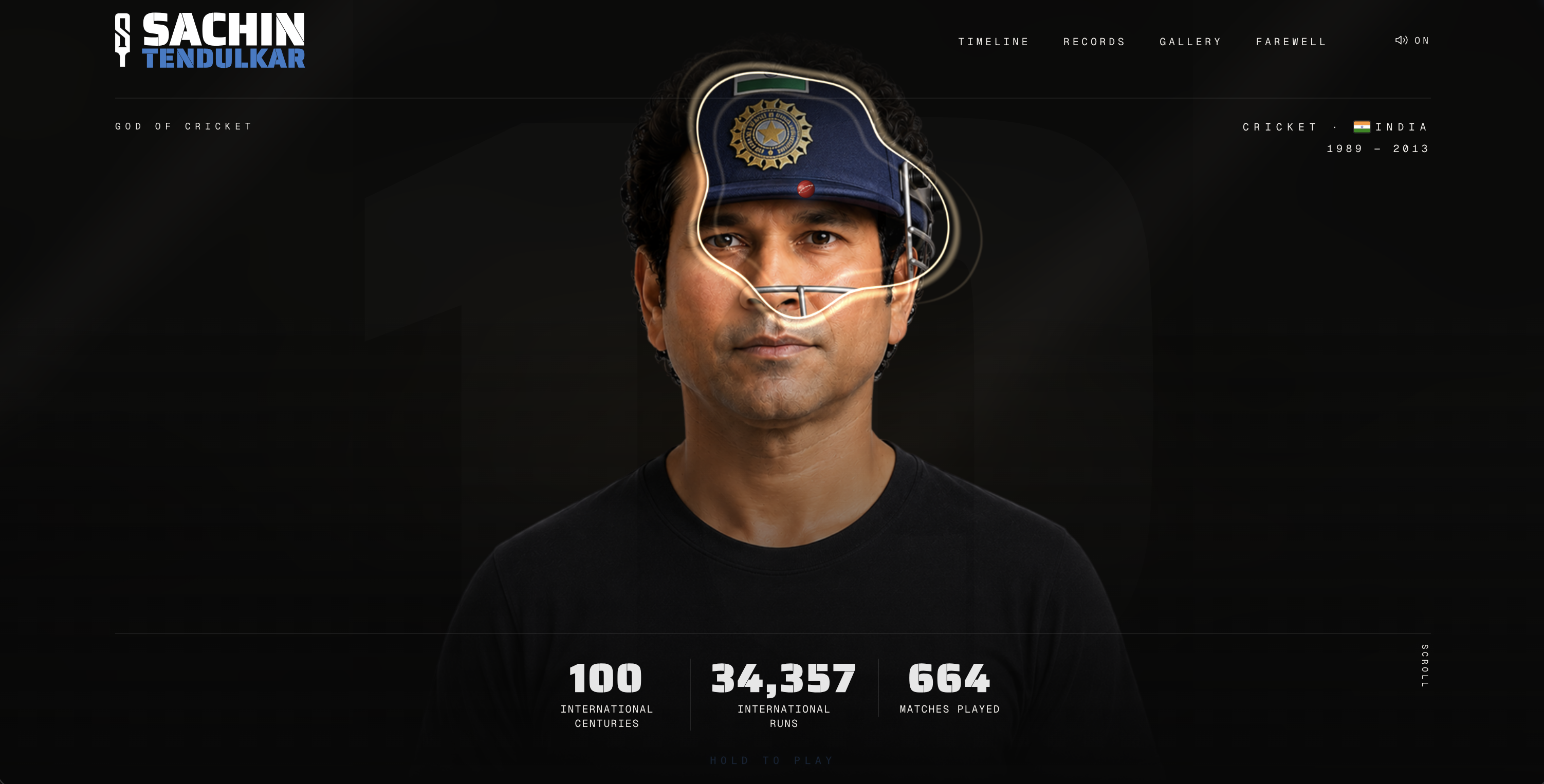
The premise
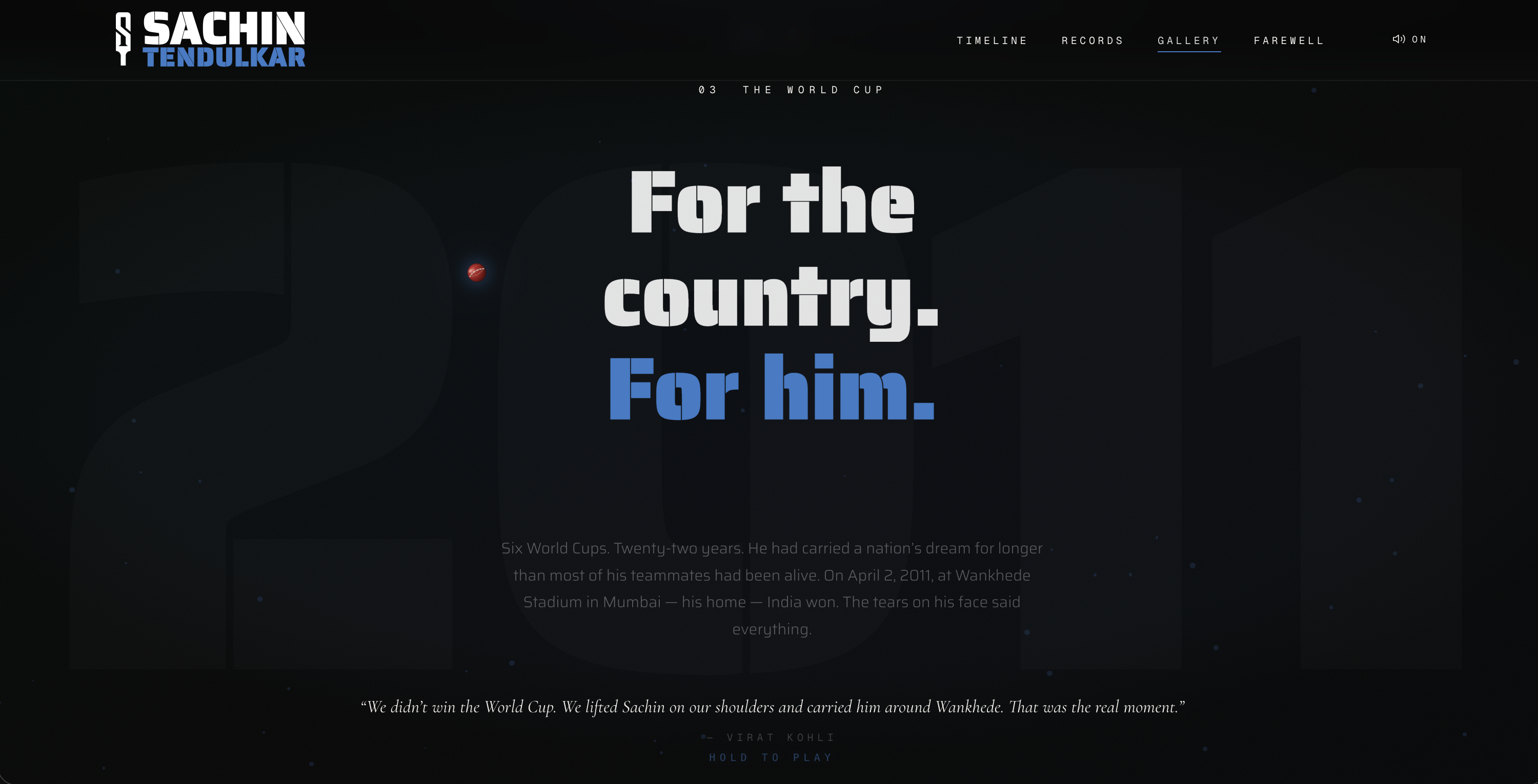
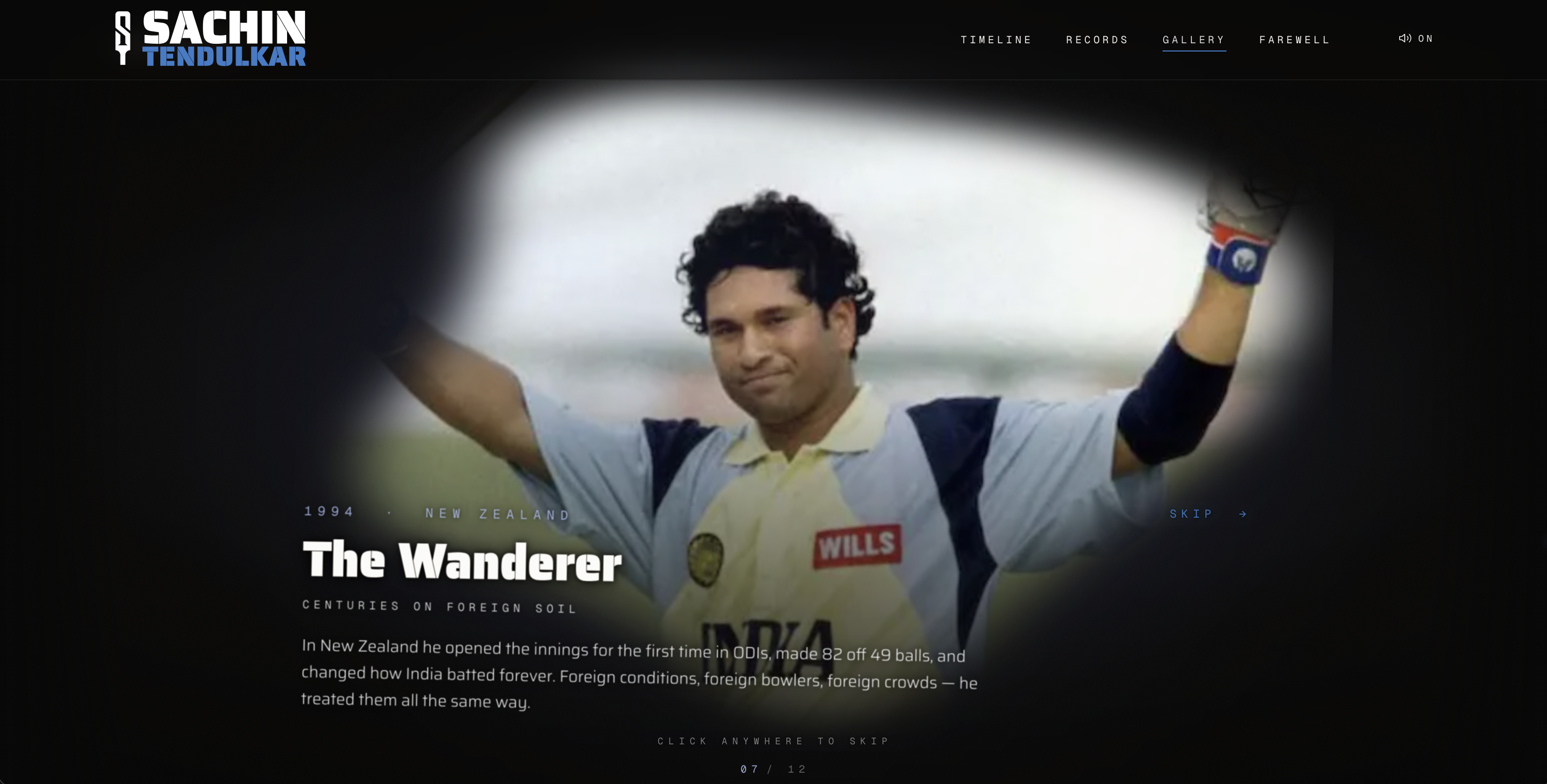
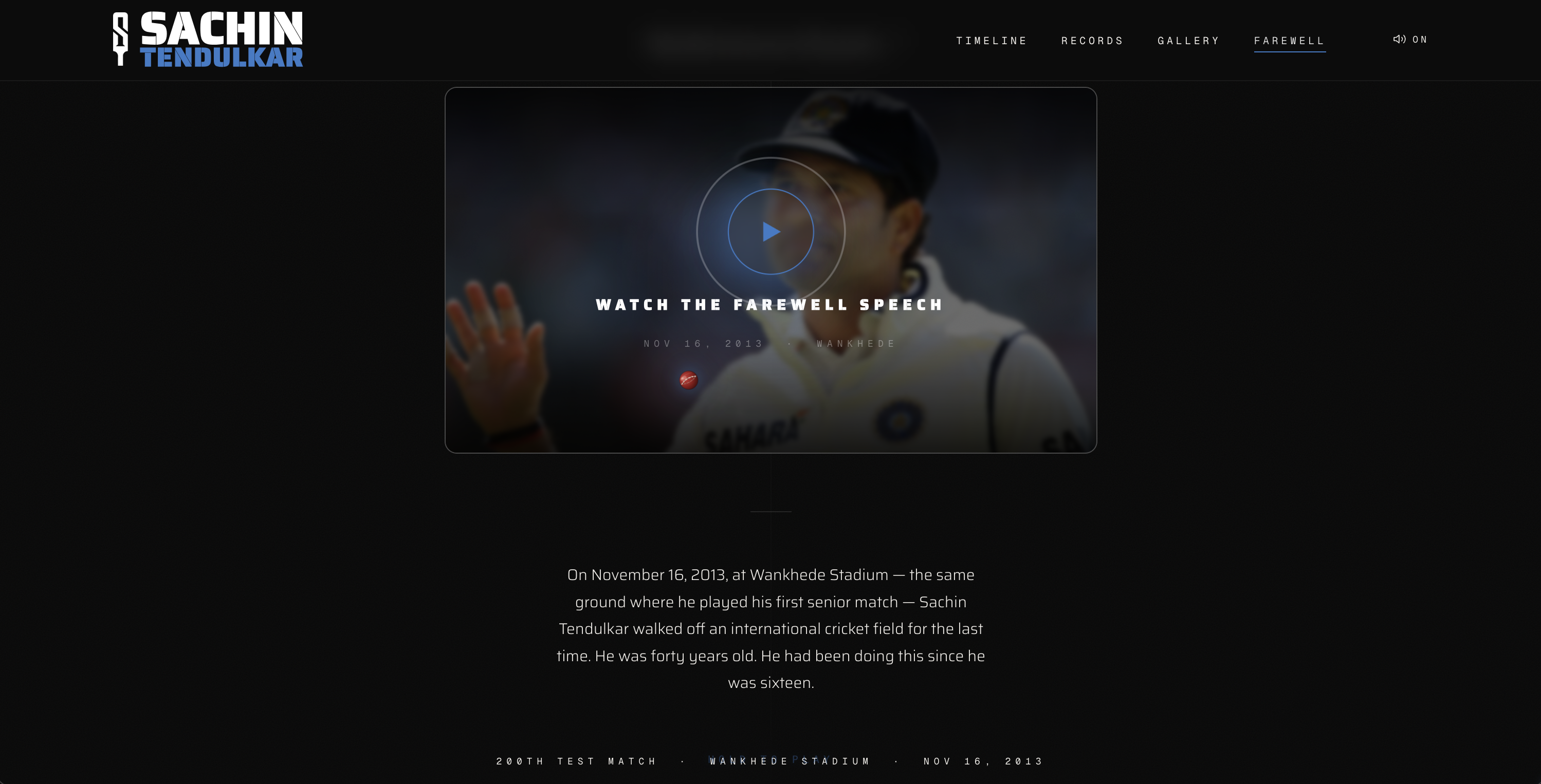
A cinematic, scroll-driven tribute to Sachin Tendulkar — built less like a website and more like the opening shot of a film. Designed, prompted, and shipped by one person working alongside two AI co-founders. A late-night question — why doesn’t this man have a cinematic website? — turned a “simple three-day site” into a two-month obsession.
It was never really about a website. It was about one question:
Can technology and storytelling recreate legacy?
Not a portfolio, not a cricket site, not another scrollytelling clone — a digital museum, where you don’t scroll through content, you scroll through time.
The honest numbers
- Original estimate: three days. Actual: ~two months.
- 47 redesigns, 120+ prompts written.
- 3 existential crises, and 1 strangely emotional 3:14 AM bug fix.
Three voices
It looked like a solo project from the outside. It wasn’t.
- Me — vision, direction, and chaos.
- ChatGPT — ideas, prompts, and overconfidence.
- Claude — execution, clean code, and emotional support.
A highly efficient team with one flaw: no idea when to stop improving things. The first standup set the tone — I said “let’s build a simple website,” and by the end we’d agreed on motion, parallax, audio cues, and “maybe a small game at the end.”
The build, in chapters
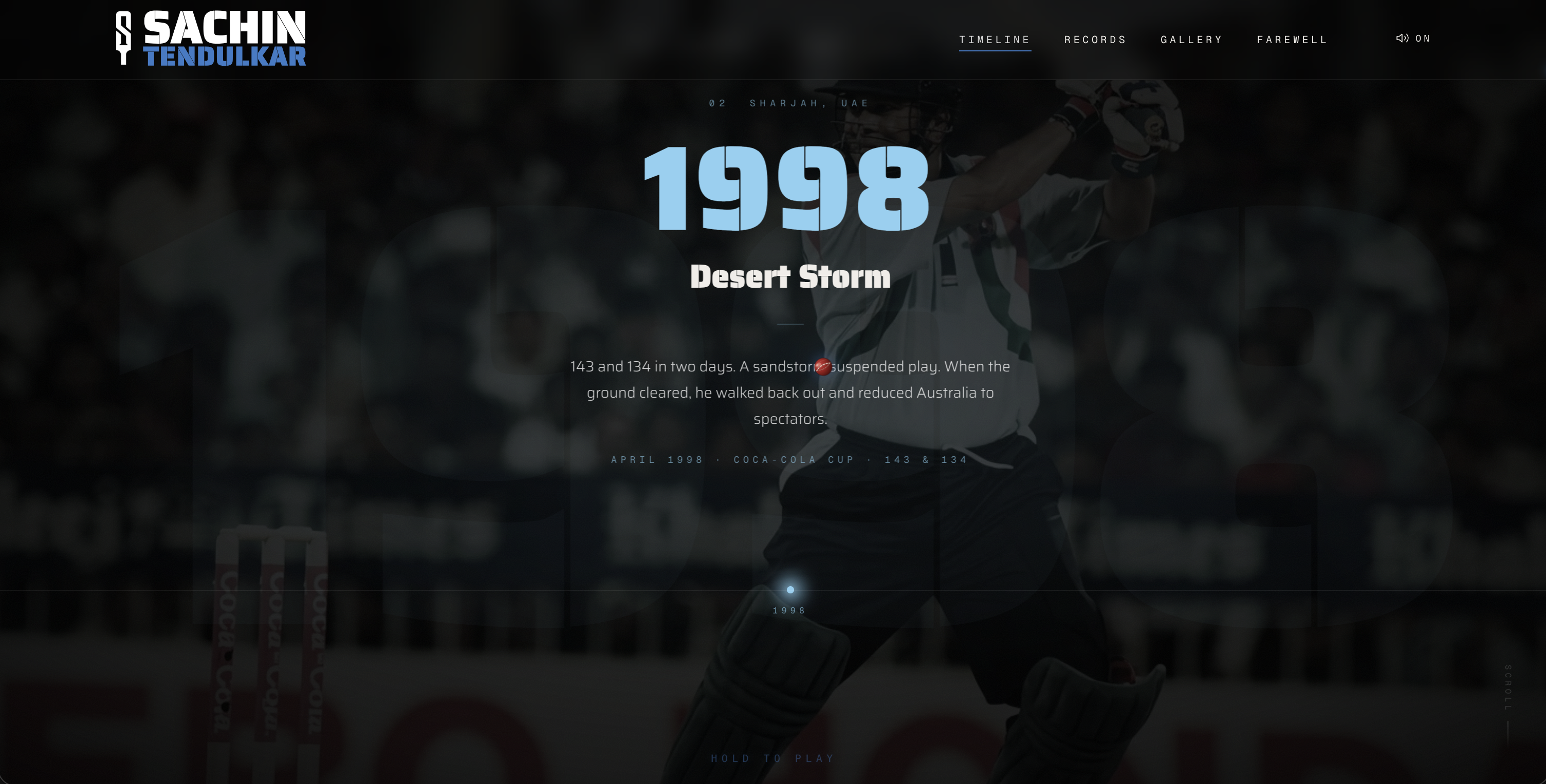
It started the way most over-scoped ideas do: late night, a cover drive in slow motion, zero planning. Inspiration came from Lando Norris’s site — which, for Sachin, was the design equivalent of casually climbing Everest in sandals.
Make it more cinematic
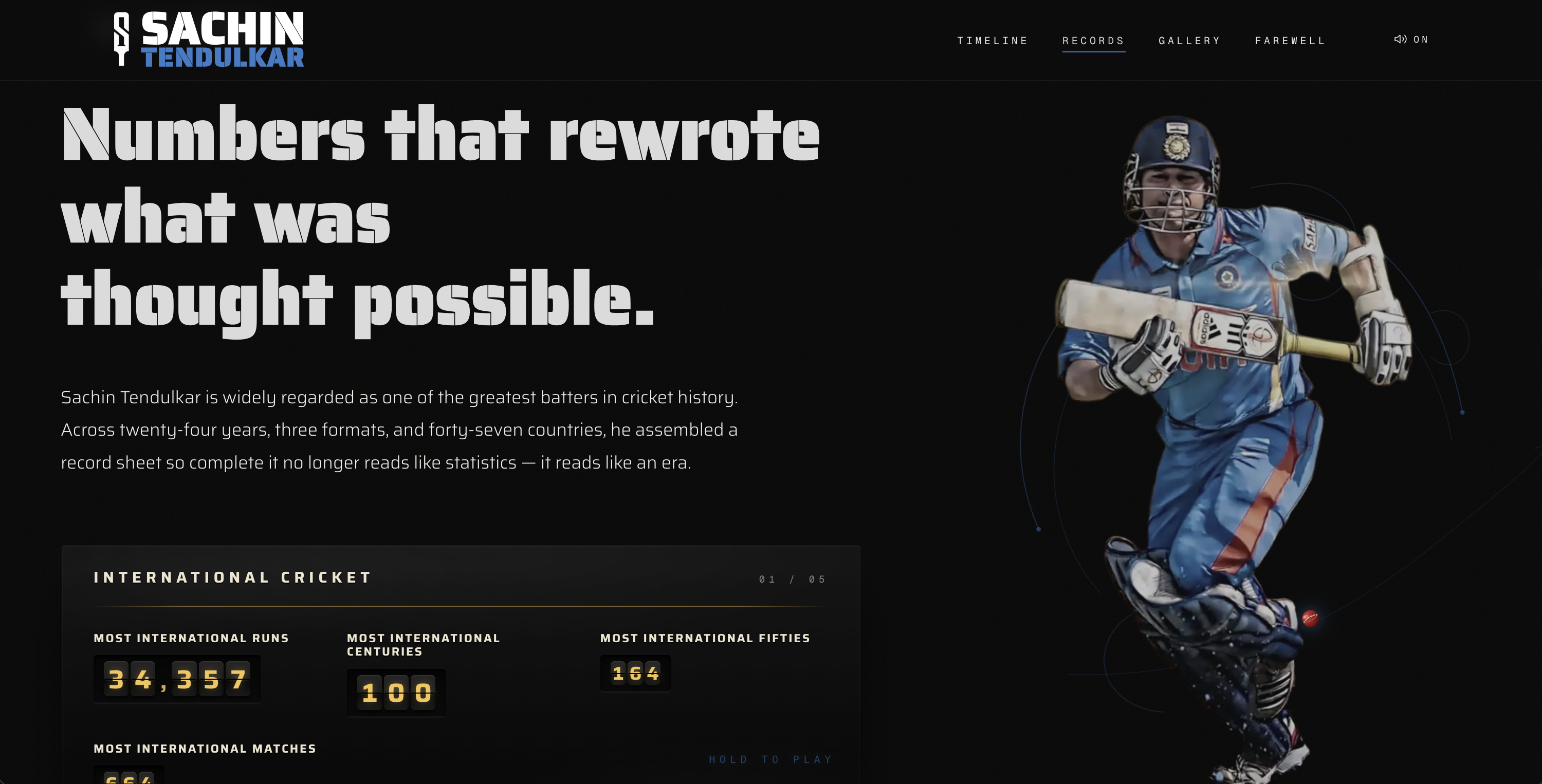
The daily ritual: ask for “more depth,” receive parallax, shaders, and typographic reveals. Then ask to make performance “24% better” — which, as Claude pointed out, “is not how performance works.”
Scroll became the whole thing
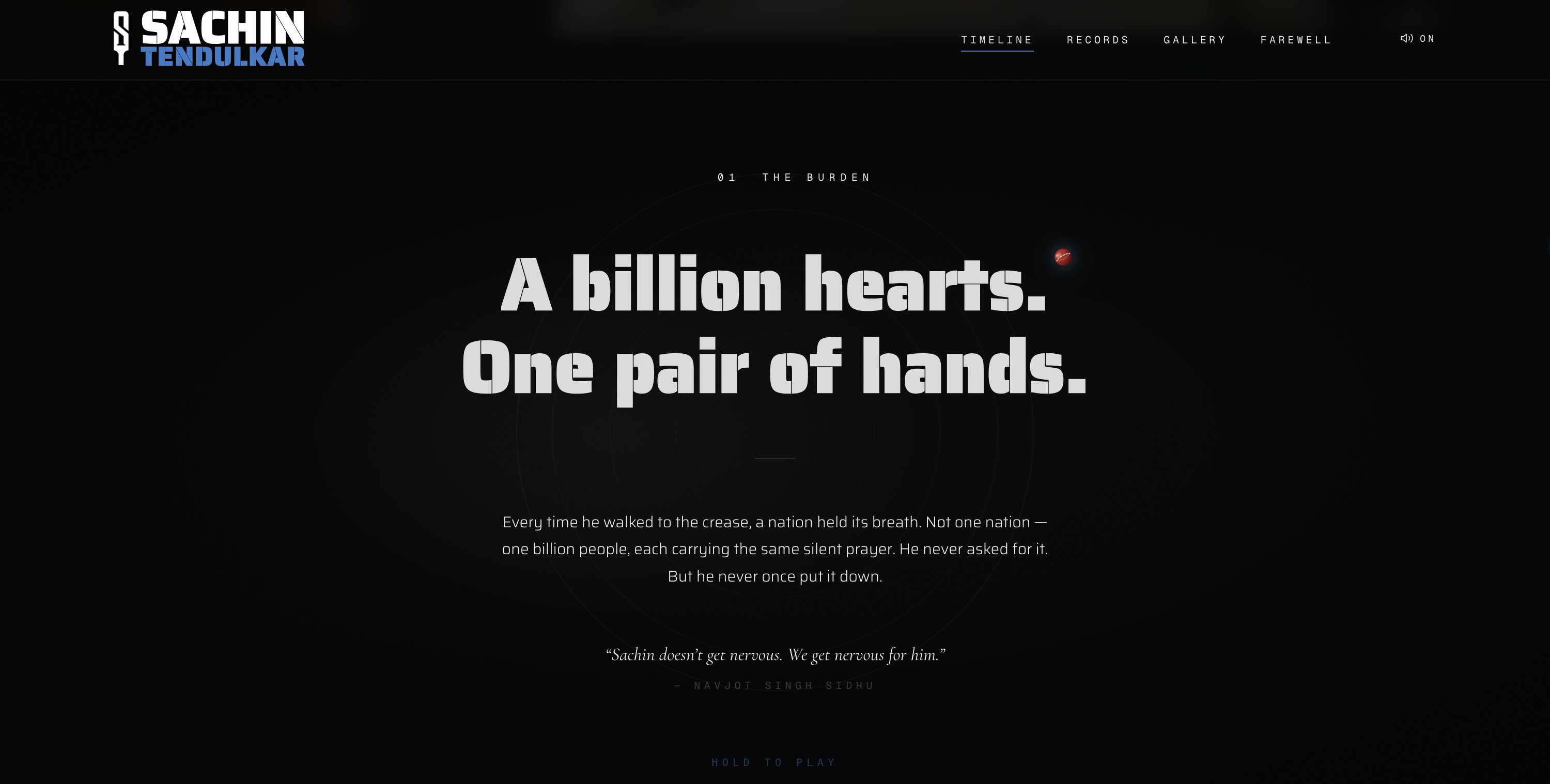
Around week two, scroll-driven storytelling took over. Every scroll now revealed a memory, triggered an emotion, and added two new bugs. That was the moment it stopped being a website.
Audio I almost skipped
A subtle stadium ambience — crowd murmur, a distant bat-on-ball — and the entire thing changed. Now it feels like cricket. Then went unreasonable hours tuning fades nobody will ever consciously notice. Which is exactly the point.
The cricket game
An interactive game that began as “PowerPoint with a cricket ball” and, after pseudo-3D depth, timing-window mechanics, and reward feedback, became genuinely fun — in about fourteen prompts.
The prompts were the design
The project ran on prompts, in four flavours: master (“here’s the vision”), follow-up (“now refine it”), fix-this-please, and why-is-this-broken (sent at 2 AM). Every prompt improved something and broke something else. That’s not a bug — that’s the deal.
The one that set the tone for everything after it:
You are designing a cinematic homepage for
Sachin Tendulkar. Treat it less like a website,
more like the opening shot of a film.
The hero must feel like a memory, not a banner.
The one I’m proudest of — the audio nobody will consciously notice:
Audio should never announce itself. It should
sit underneath the visuals like a memory you
didn't know you had. Fade in at hero, out at
gallery. Never loop in a way the ear can detect.
And the best prompt I wrote wasn’t for code at all:
Don't generate code yet. Explain what you'd
build, in plain language, like you're pitching
it. Then we'll decide.
That single prompt cut revision cycles in half — and taught me that “asking for code” had been the wrong default the whole time.
What I actually learned
- AI won’t replace you — it will out-work you. If you stop, it doesn’t. That’s the real pressure.
- The prompt is the design. A vague prompt makes a vague website — garbage in, garbage out, but cinematic.
- Motion is storytelling. A fade isn’t decoration; it’s a sentence.
- Perfection is a trap. Shipping is the only edit that matters.
- The best prompt isn’t for code. It’s “explain what you’d build before you build it.”
Outcome
It shipped — a cinematic cold-open hero, scroll-as-time storytelling, layered stadium sound, an interactive cricket game, and a fullscreen gallery that behaves like a museum. Somewhere between the prompts, the parallax, the bugs, and the fades nobody will notice, it ended up feeling — for a few scrolls — a little bit like him.
You’re always one prompt away from making things better — or worse.