Growth
Mentra.ai
What does learning become when a system can finally pay attention to one person?
Preview project ↗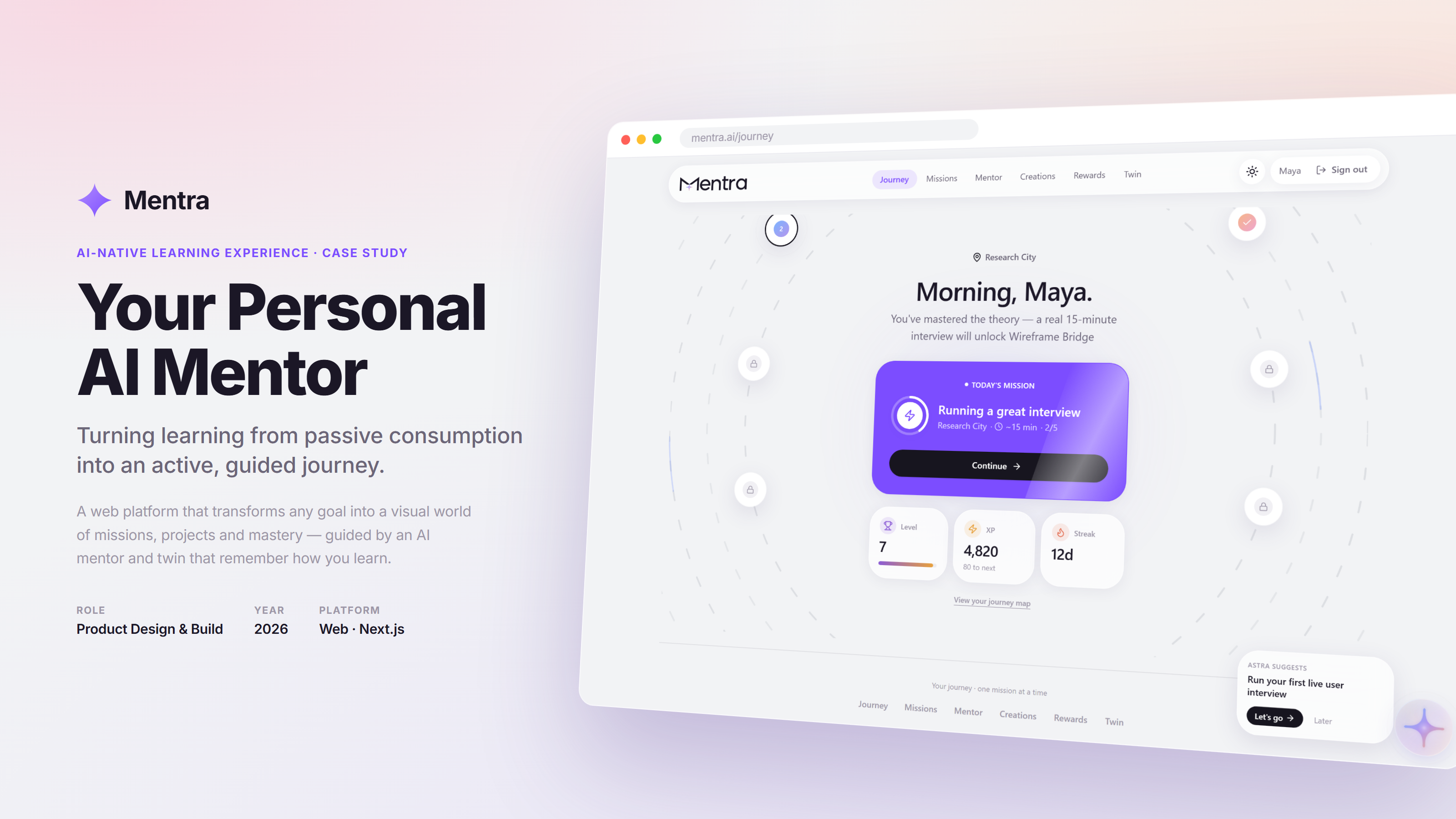
The platform
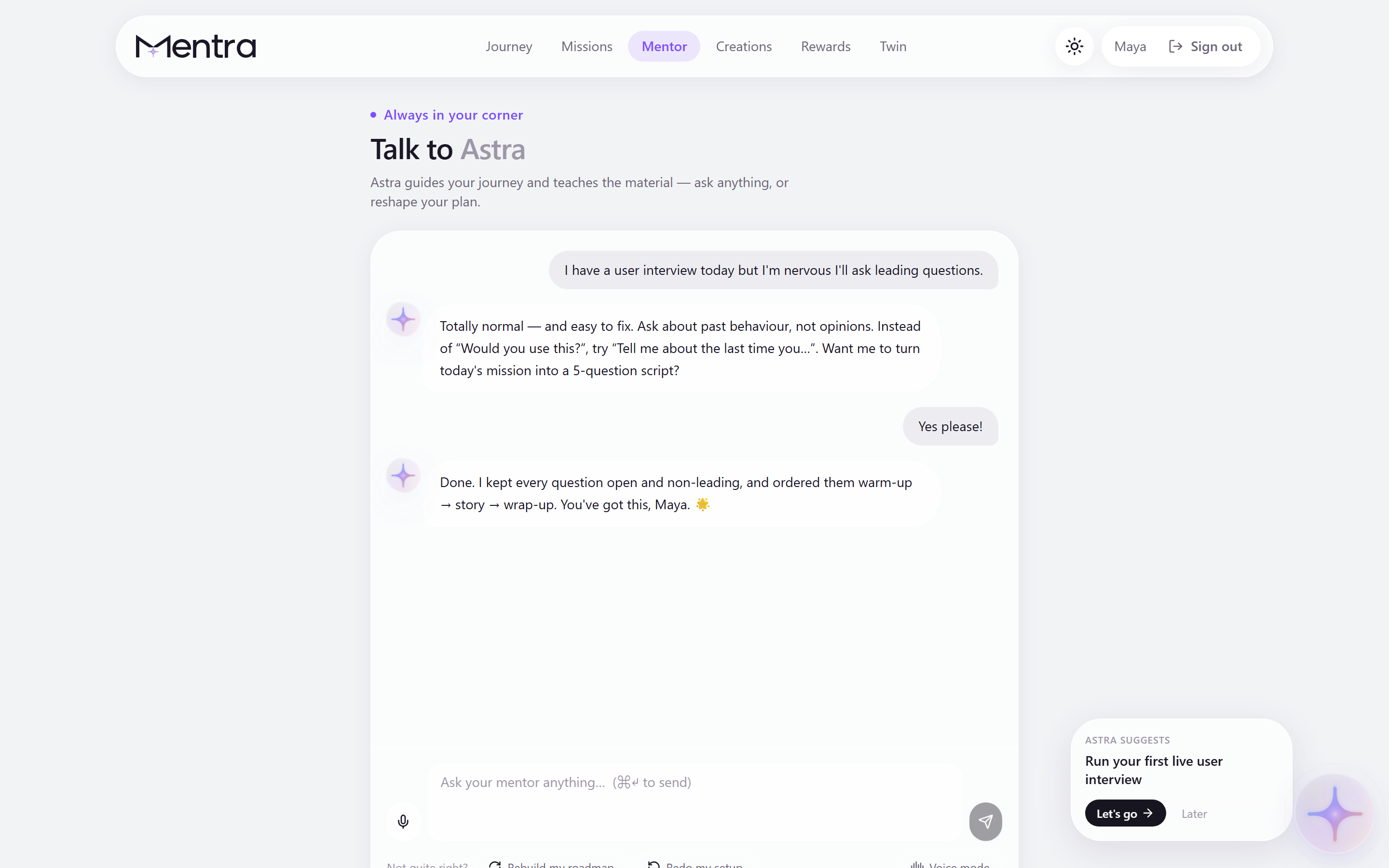
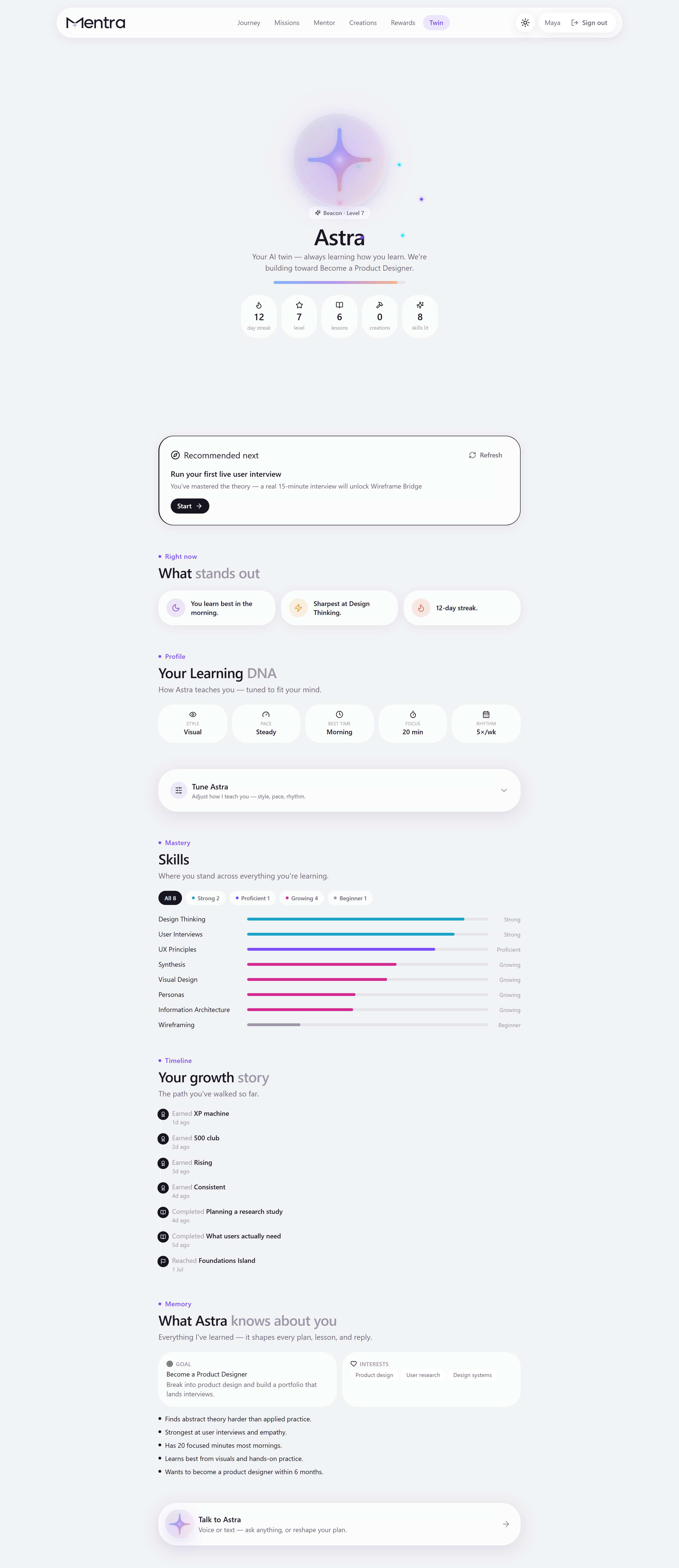
Mentra is not a course catalog, an LMS, or a productivity dashboard. It’s an AI-powered personal mentor that turns any goal into a visual journey of missions, projects and mastery — and then walks it with you. Each learner gets a world built around their goal, an AI mentor (“Astra”), and an evolving AI Twin that together remember where they are, where they want to go, and what their single best next step is.
- Platform
- Web · Next.js, Supabase, LLM engine
- Users
- Career switchers · self-learners · upskillers
- Scope
- 6 surfaces · design system · dark mode
- Approach
- AI-native, designed & built end to end
What was broken
How do people actually learn? Not how we say they learn — how they really do, in fits and frustrations and small private victories. Modern platforms answer that question with volume: more courses, more videos, more modules. The result is a familiar failure loop — learners don’t know what to learn, when, why it matters, or whether they’re improving, so momentum collapses and they quit. The scarce resource was never content; it was direction, accountability, and a coach who remembers you.
How it works
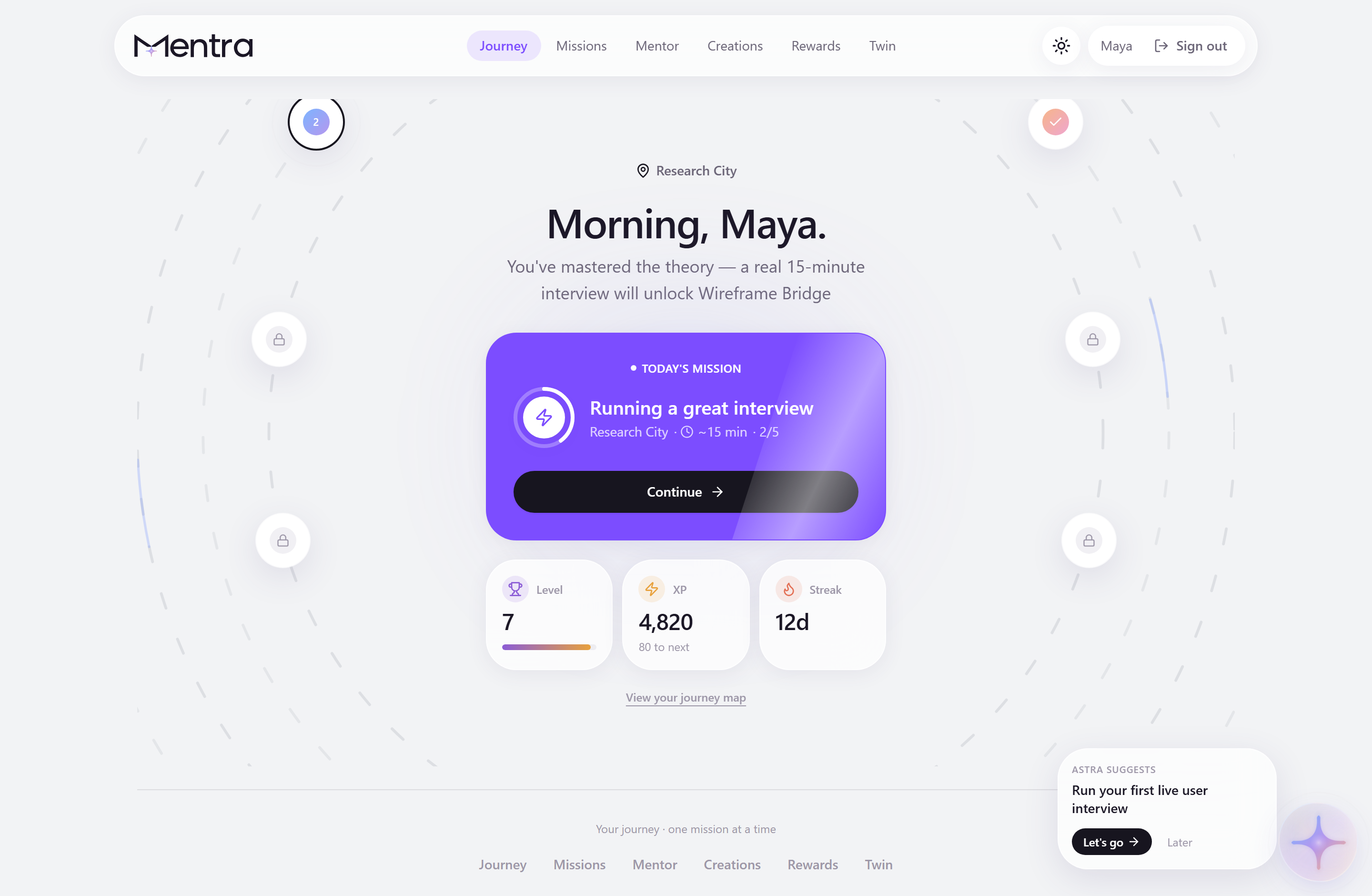
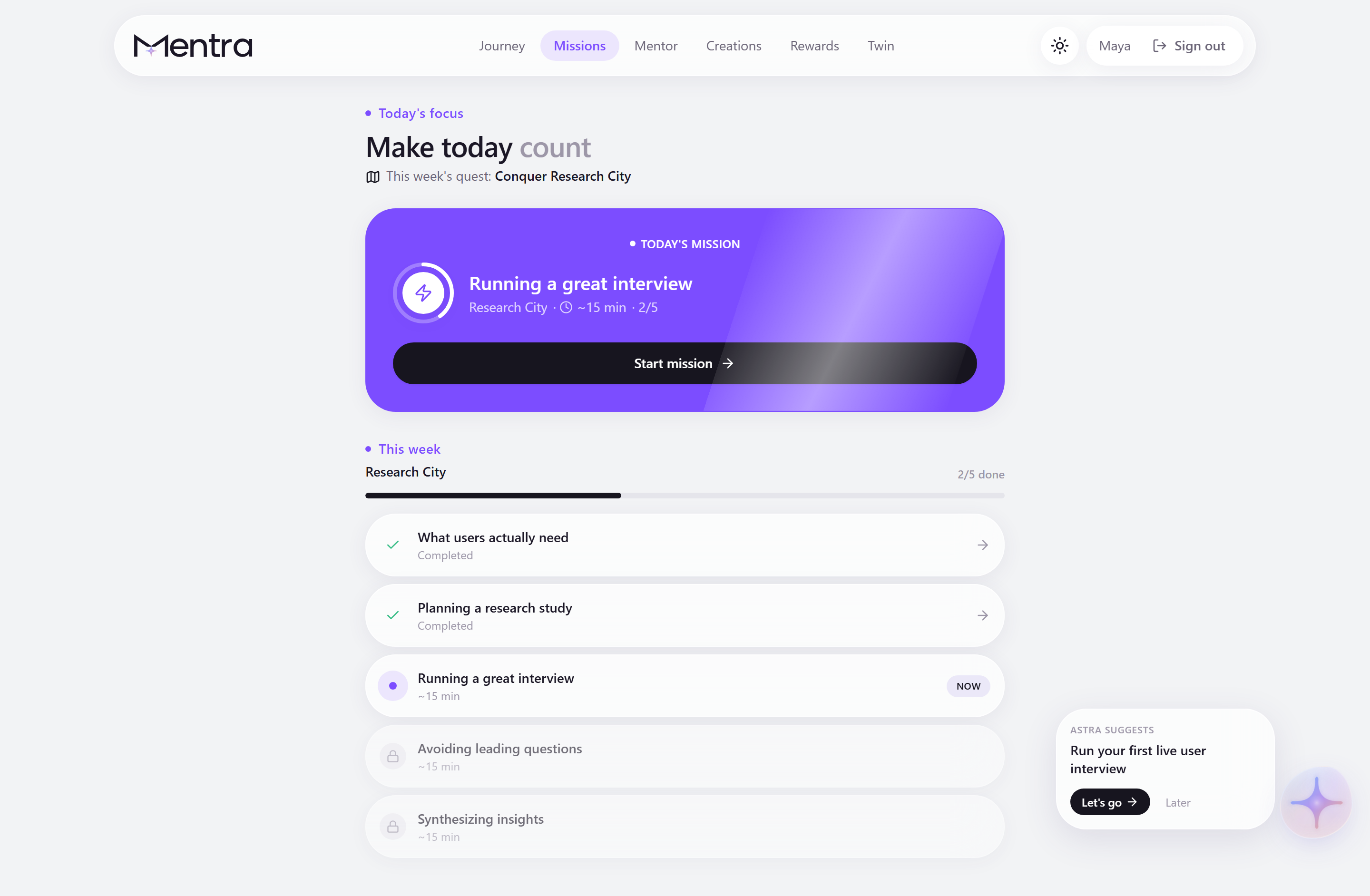
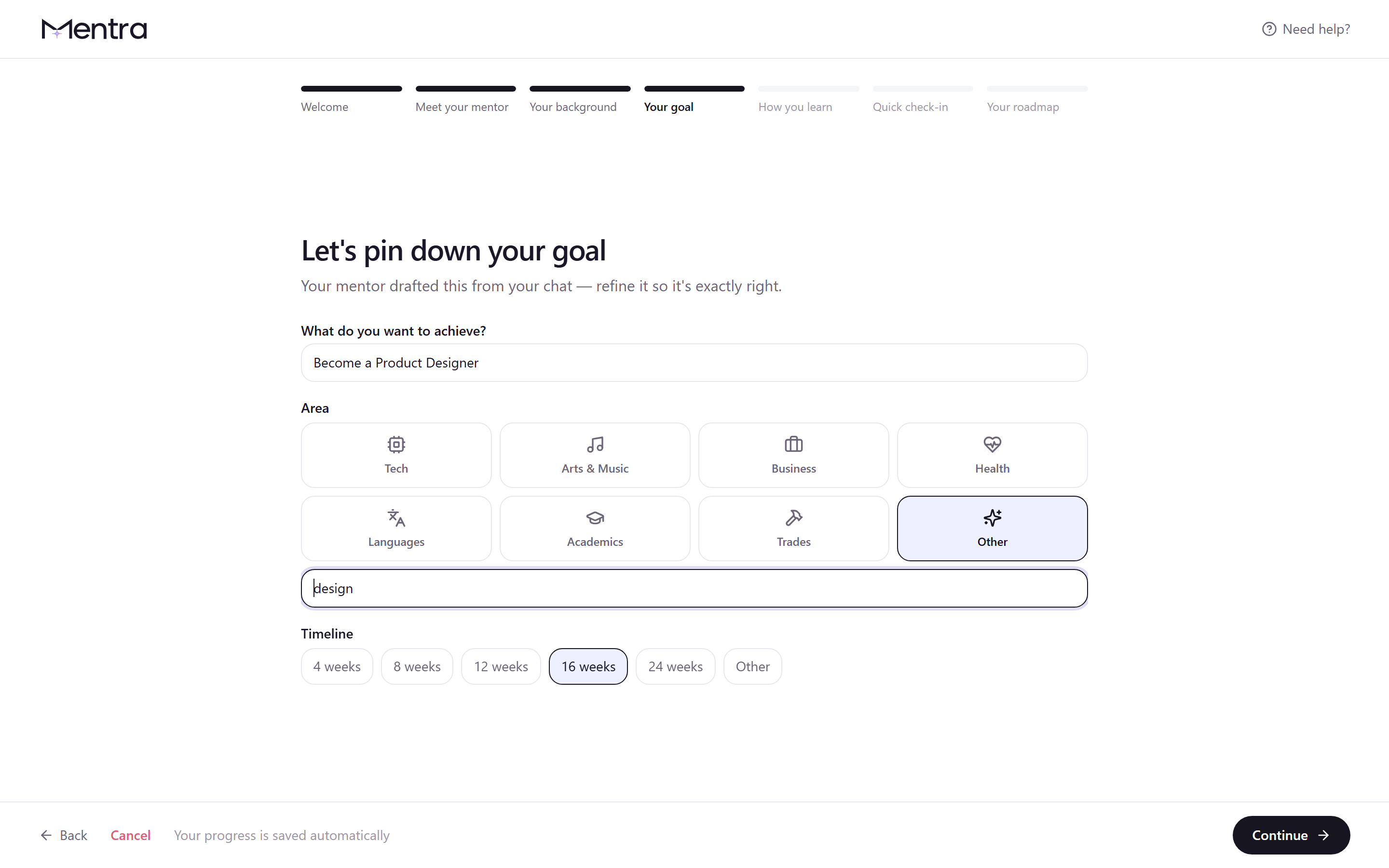
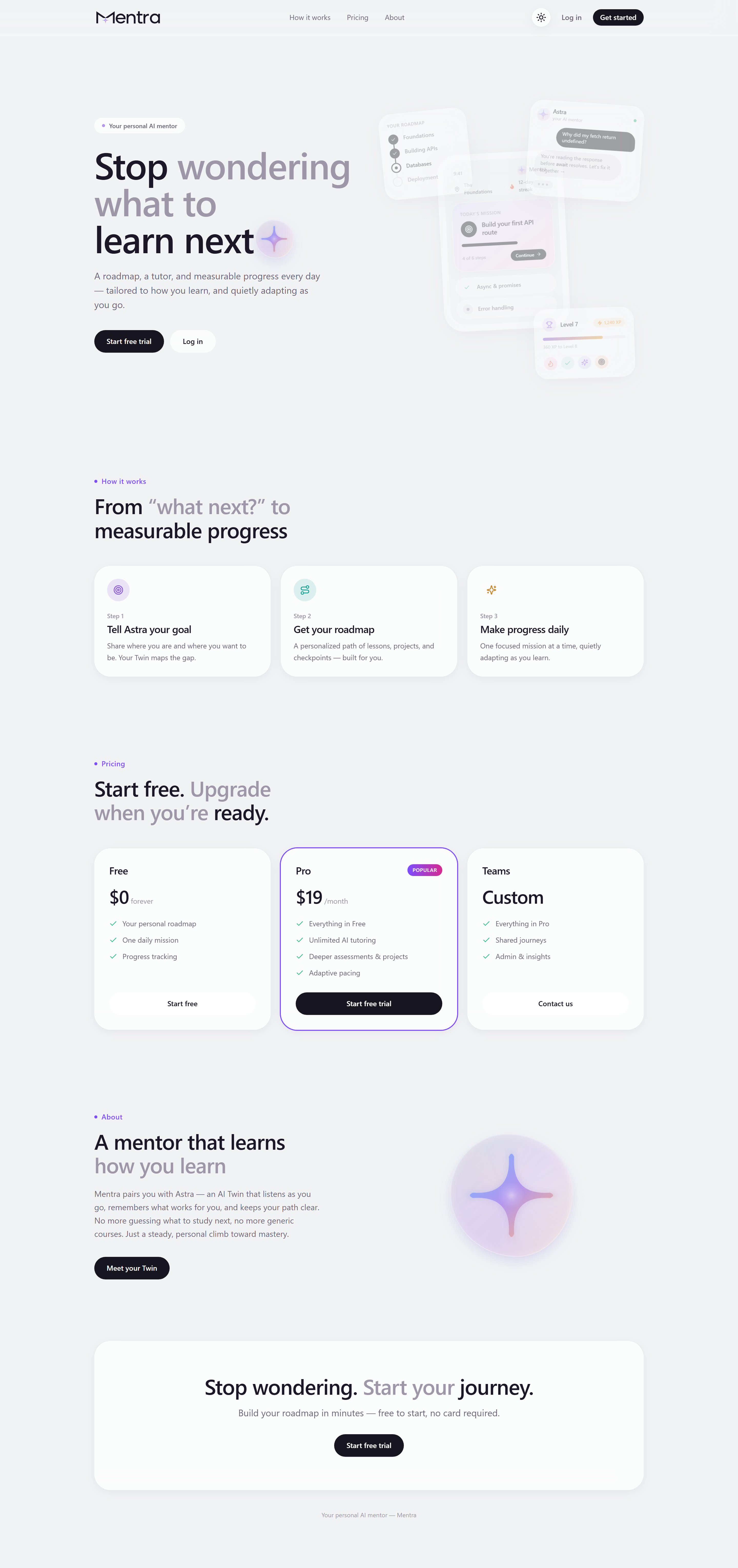
I designed around one idea: growth happens when a system meets you where you actually are. That became a few firm commitments — make the journey the product, not the dashboard; always surface one meaningful next step, never a backlog; put an AI mentor everywhere, not on a separate chatbot page; and prioritise learning by doing over theory. A guided onboarding has Astra draft your goal from a conversation and generate a personalised roadmap, then everything rides one repeating loop — goal → journey → mission → project → feedback → growth → unlock → mastery — across six connected surfaces, each replacing a tired LMS concept.
What breaks people
- Choice overload — too many courses, no clear starting point or path.
- No sense of progress — percentages and checklists don’t feel like growth.
- Passive consumption — watching isn’t learning; skills never get applied.
- No personal guidance — nobody adapts the plan to how this person learns.
- Momentum collapse — without a next step and a reason to return, people drop off.
How Mentra answers it
- Journey — a world of regions you travel through. Replaces the dashboard.
- Missions — today’s mission, done / now / locked. Replaces tasks & modules.
- Mentor (Astra) — a coach grounded in your real data. Replaces the chatbot.
- Twin — a living map of how you learn. Replaces the static profile.
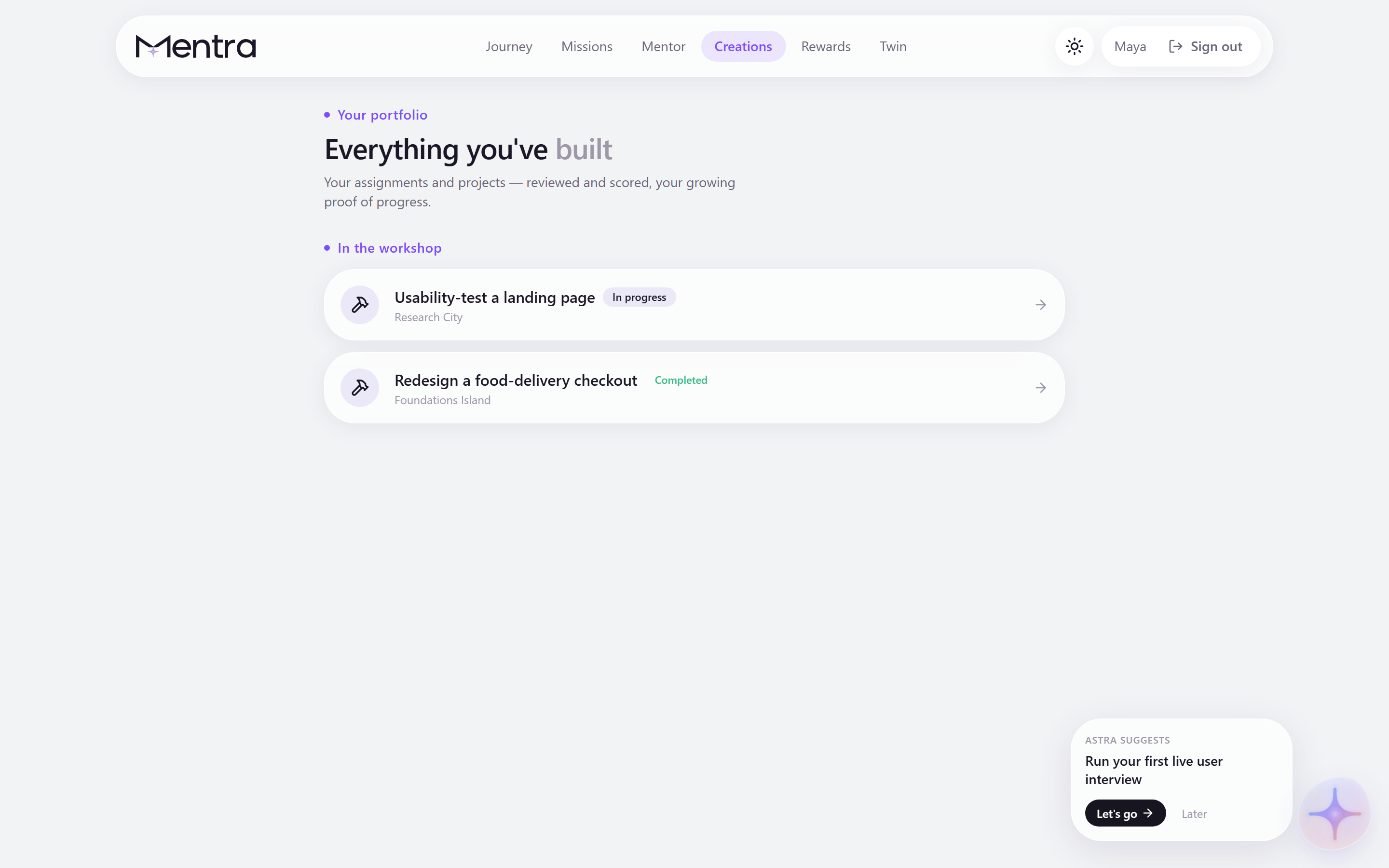
- Creations — projects scored into a portfolio. Replaces certificates.
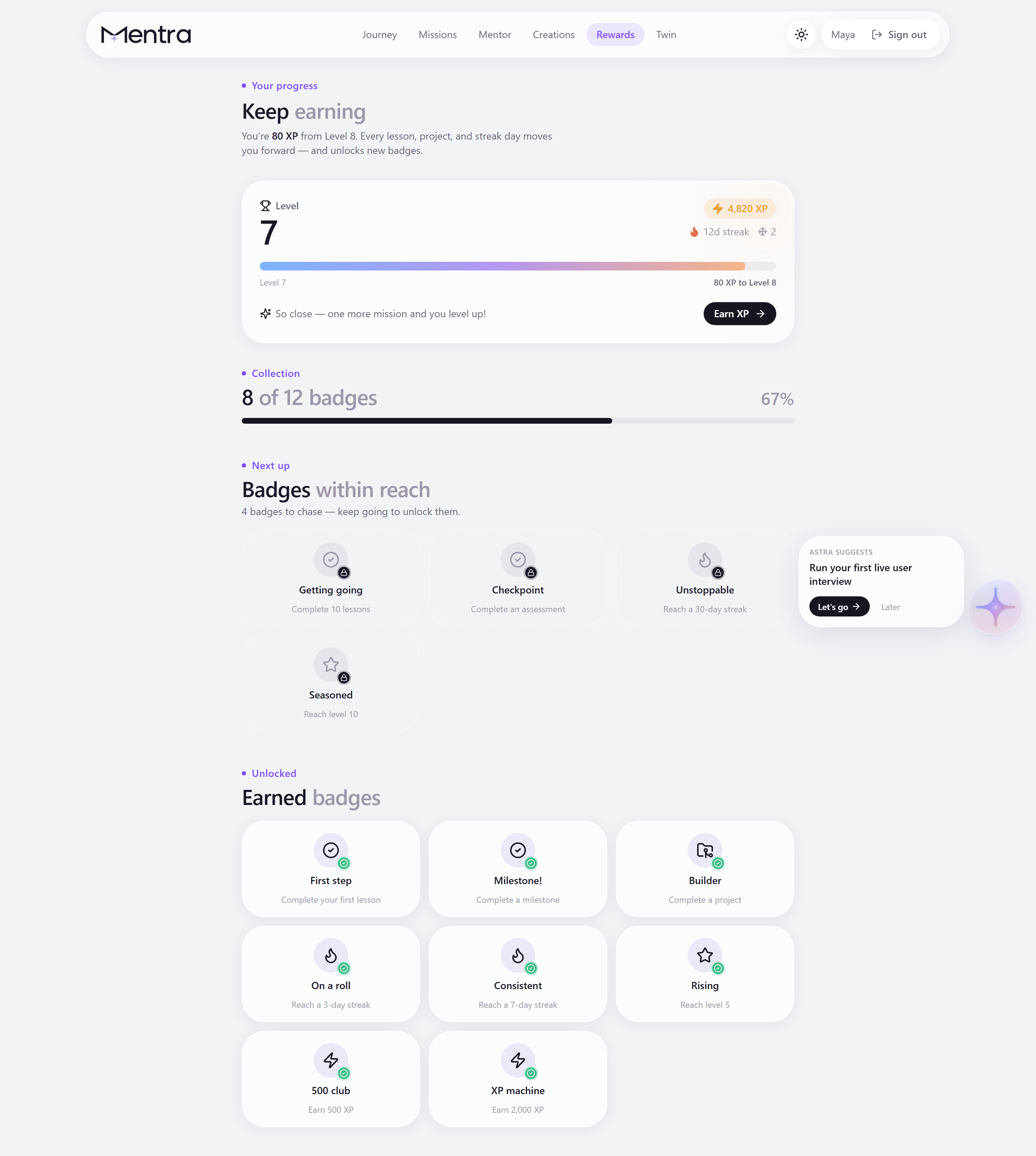
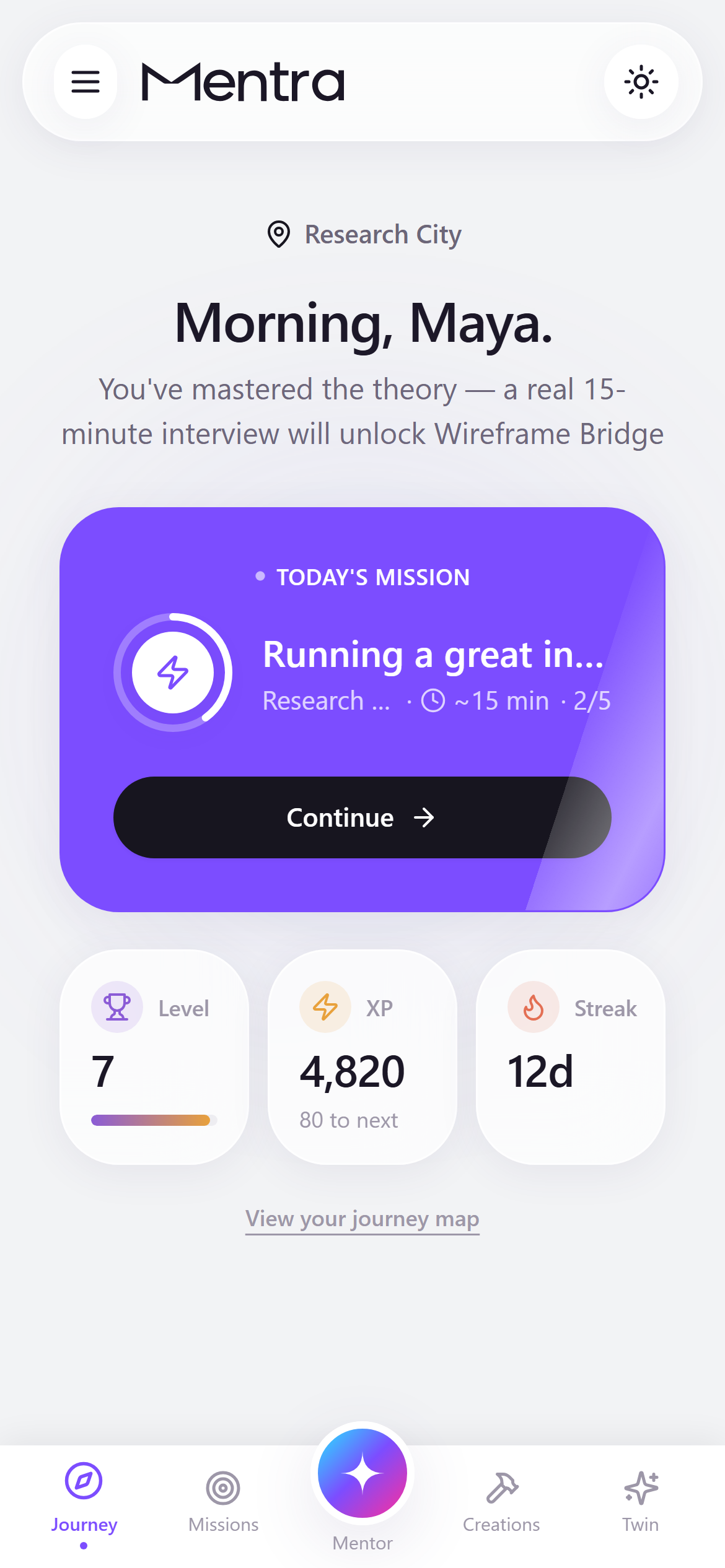
- Rewards — XP, levels, streaks and badges. Replaces reporting.
Impact
Mentra reframes an over-served market: the problem was never a shortage of content — it was the absence of direction, momentum, and a coach who remembers you. As a self-initiated product it carries no measured metrics yet; what it does carry is a deliberately small surface area, aimed at activation, habit, and real output.
Shipped
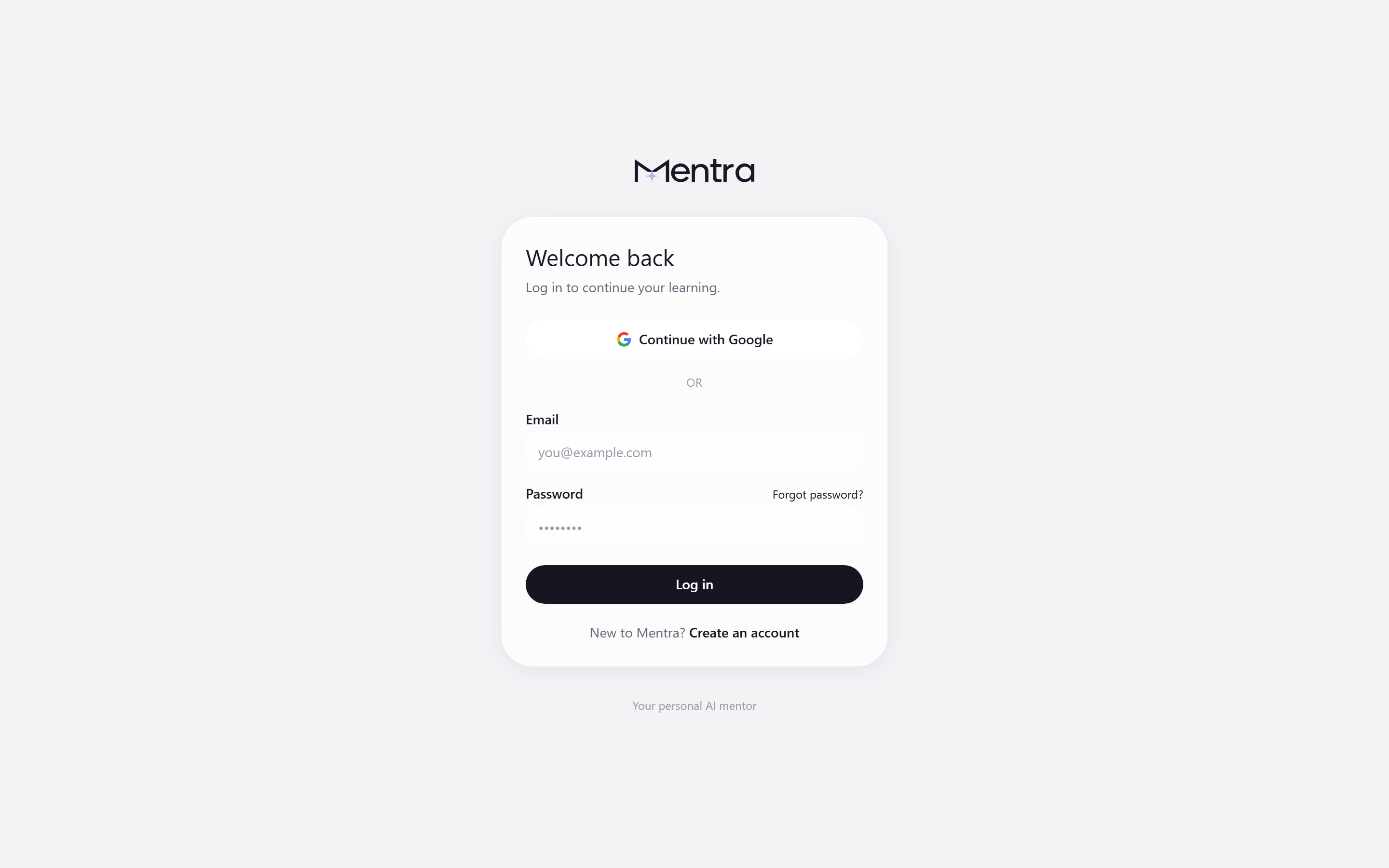
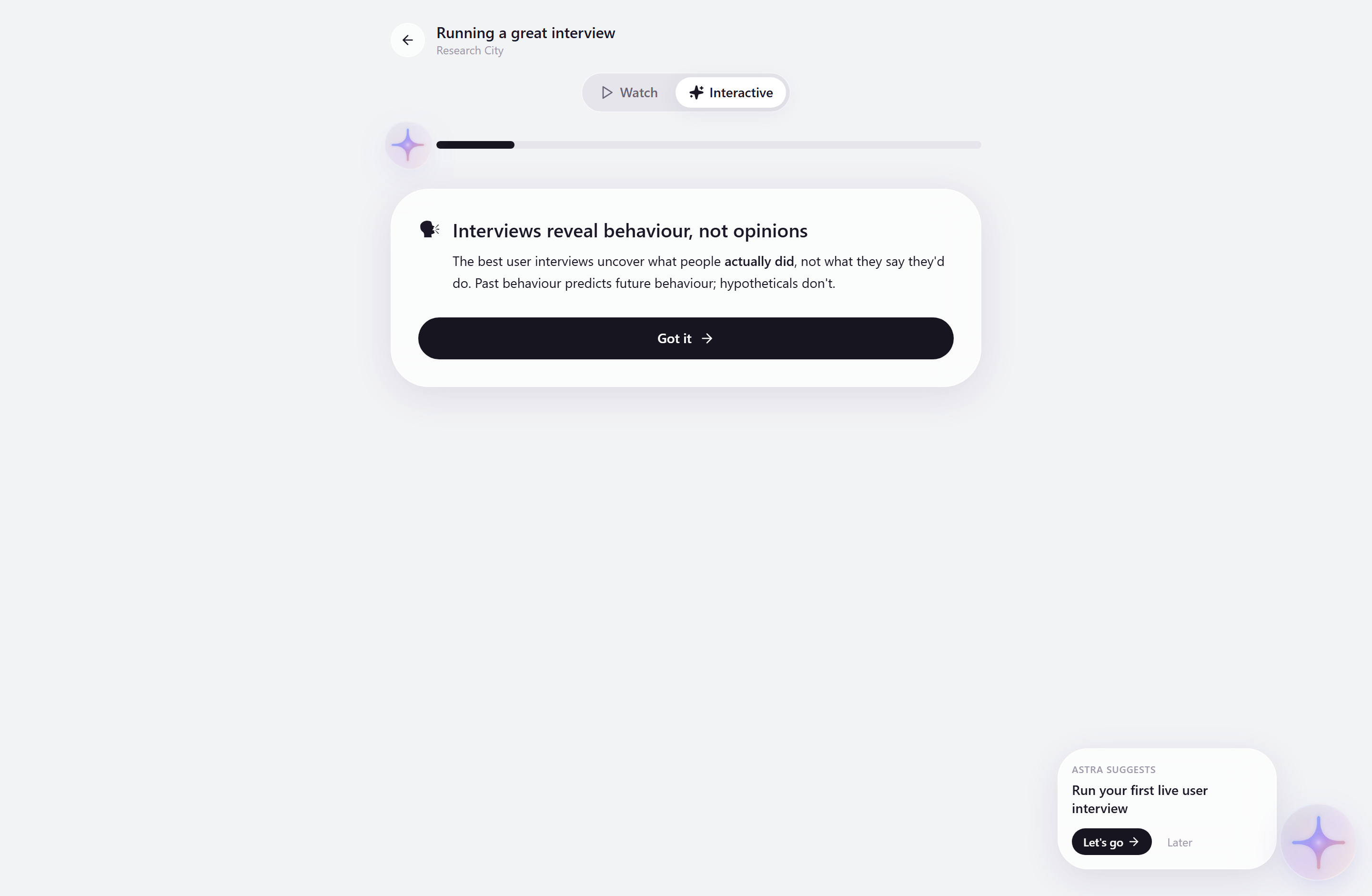
Every screen here is the real, running product — a guided onboarding, a marketing site that leads with the promise (stop wondering what to learn next), a single calm sign-in, five-minute interactive lessons, and a fully responsive app that folds all the way down to a native-feeling mobile shell with a bottom tab bar. Tap any image to open the viewer.
Reflection
By making the journey the interface and embedding intelligence at every step, Mentra turns passive consumption into active transformation. The hardest and most rewarding design work was restraint — resisting the pull toward dashboards, settings and analytics, and trusting a single, confident “next step” to carry the experience. Designing with an LLM across the mentor, the twin, the lessons and the review engine also meant designing for uncertainty: graceful fallbacks, provider-agnostic generation, and a tone for Astra that stays encouraging without ever going hollow.
The future of learning is adaptive, contextual, and deeply personal.